



What does it actually take to grow and maintain world class turf? It combines the right grass, healthy soil and expert care, and there is a lot more going on than meets the eye. Read on to find out how it all works.
Key takeaways
- World class turf relies on healthy soil, proper drainage, regular mowing, irrigation, fertilisation and aeration.
- Deep aeration reaches up to 30 cm, reducing soil compaction and improving root growth, drainage and turf health.
- Biochar enhances soil structure and water retention, with benefits lasting for hundreds of years.
- New sod requires around 2 weeks before light foot traffic and must be kept consistently moist during establishment.
- Natural turf can last indefinitely with proper maintenance, while artificial sports turf typically needs replacement every 8 to 10 years.
- Professional sports surfaces are built with engineered soil layers, premium grass species and precise maintenance to ensure year round performance.
What is turf management?
Turf management is the practice of growing and maintaining grass surfaces so they stay healthy, dense and playable. It covers soil prep, mowing, watering and feeding, plus relieving compaction in the root zone.
It is far more than cutting grass. A good turf manager thinks about what happens below the surface, because roots, soil structure and drainage decide how the grass performs above ground. On a golf course this work is what keeps fairways smooth and greens true. Specialist providers like GolfDren handle this through deep aeration, soil enrichment and turf renovation.
So is turf hard to maintain? Honestly, yes. High-quality turf is one of the most demanding living surfaces in sport. It reacts to weather, foot traffic, disease and the seasons, and it never stops needing attention.
Is sports field grass real?
A common question, and the answer depends on the sport and the venue.
Most golf courses are real grass. The greens, fairways and roughs are living plants grown in carefully built soil. Some courses add artificial grass on tee mats or practice areas, but the playing surface is almost always natural.

Football is more mixed. Many top stadiums use real grass, some use fully artificial pitches, and a growing number use hybrid systems that stitch synthetic fibres into natural turf for extra durability. Baseball is similar. Plenty of fields are natural grass, but artificial surfaces are common, especially in domed stadiums or places with harsh weather.
And grass tennis courts? They still exist, though they are rare. Wimbledon is the most famous, but grass is now a small minority of professional courts because it is expensive and slow to maintain.
What grass is used on sports fields?
There is no single “best” grass. The right choice depends on climate, use and how short the grass needs to be cut.
On golf greens, two grasses dominate. Creeping bentgrass suits cooler regions, while bermudagrass is favoured in hot climates. Both tolerate being mowed extremely low without dying. In some older courses, fine fescues and annual meadow grass (Poa annua) also appear.
The colour, density and roll of a good green come from this grass being grown in a sand-based root zone and cut very precisely. That smooth, fast surface golfers call a true green turf is the product of the right plant in the right soil, mowed daily.
| Sport | Grass species | Typical cut height | Surface type |
|---|---|---|---|
| Golf greens | Bentgrass / Bermudagrass | 4–5 mm | Natural |
| Cricket pitch | Ryegrass / Fescue | 1–2 mm (match day) | Natural |
| Grass tennis | Perennial ryegrass | 8 mm | Natural (rare) |
| Golf fairways | Bentgrass / Bermudagrass | 10–16 mm | Natural |
| Football | Ryegrass / Bermudagrass | ~28 mm | Natural / Hybrid |
| Rugby | Ryegrass blends | min. 25 mm | Natural / Hybrid / Artificial |
| Polo | Bermudagrass | 25–35 mm | Natural |
| Baseball | Ryegrass / Bermudagrass | 20–30 mm | Natural / Artificial |
How world-class turf is built
Great turf starts long before the first seed or roll of sod. It starts with the ground underneath.
How golf greens are made
A modern golf green is engineered, not just planted. The most common method follows a layered design where a deep bed of carefully chosen sand sits over a gravel drainage layer, often with pipes underneath to carry water away.
This structure does something simple but vital. It drains fast, resists compaction and gives roots a stable place to grow. The grass is then either seeded or laid as sod on top. Building a green this way is expensive, but it is why a good green stays firm and playable even after heavy rain.
How grass tennis courts are made and how they work
A grass tennis court is built on a base of finely levelled, heavily rolled soil. Perennial ryegrass is the modern choice because it is hard-wearing. At Wimbledon the grass is cut to around 8 millimetres.
The court is rolled hard to create a firm, fast surface. This is why grass courts play the way they do: the ball skids low and quickly, rewarding fast, attacking play. The trade-off is that grass wears down during a tournament, which is why you see bare patches near the baselines by the second week.
What is sod installation?
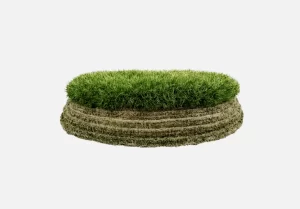
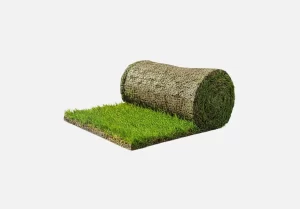
Sod is grass that has already been grown elsewhere, then cut into rolls or slabs with the roots and soil attached. Sod installation means laying pre-grown grass onto prepared ground for an instant lawn or playing surface.
Is sod easy to install? Laying it is straightforward in principle. You prepare the soil, lay the pieces tightly together and water them in. Doing it well on a large or high-spec area is another matter, because the ground must be level, the seams tight and the timing right. For sports surfaces, professional sod installation and turf renovation gives the fastest, most reliable recovery.
A few practical points worth knowing:
- Premium grass sod is grown specifically for the surface it will cover, so golf-grade sod differs from a garden lawn roll.
- Sod delivery and installation are often booked together, since sod is perishable and should be laid within a day or so of being cut.
- Sod delivery cost depends on distance, quantity and grass type, and it is usually quoted separately from the laying work.
Pricing for a large project is a topic of its own, with golf course sod installation costs shaped by the area, the grass grade and the groundwork involved.
Bunkers and the turf around them
On a golf course, turf work does not stop at the greens. The grass faces around bunkers need shaping, sodding and protection, and the bunker itself needs proper construction and renovation to stay playable, with turf installed as the final step.
Once the structure is in place, the long-term quality of that edge comes down to two key elements. Those two things keep a bunker edge crisp and low-maintenance.
The first is the material used for the bunker liner, which stops sand mixing with soil and helps drainage. The second is the edge itself, and synthetic edging makes bunker maintenance far more efficient by holding a clean line without constant hand-trimming.
Soil preparation: biochar and other amendments
Healthy turf needs healthy soil. One of the most effective tools for improving soil is biochar.
So what is biochar soil, and what does biochar do for soil? Biochar is a charcoal-like material made by heating plant matter with little or no oxygen. Mixed into the ground, it acts like a microscopic sponge that holds water, nutrients and air, while feeding beneficial microbes.
Is biochar a fertilizer? Not exactly. Biochar as a soil amendment does not feed the plant directly the way fertilizer does. Instead it makes the soil better at holding and delivering water and nutrients, so any feeding you do works harder. GolfDren applies it as a biochar soil enhancer to boost drought tolerance.
How much biochar to add to soil depends on the soil and the goal, but it is commonly worked into the root zone at a few percent by volume. The big advantage is its lifespan. How long does biochar last in soil? A very long time. The stable carbon in biochar can remain in the soil for hundreds of years, so a single application keeps improving the soil structure for the long term.

How to care for sod after installation
The first two weeks decide whether new sod thrives or fails.
The most important task is water. Water heavily, then keep it moist for the first couple of weeks while the roots take hold. As the roots reach into the soil below, you slowly cut back the watering to encourage them to grow deeper.
When can you walk on sod after installation? Keep off it as much as possible at first. Light foot traffic is usually fine after about two weeks, once the sod has started to root and no longer lifts when you tug a corner. Heavy use, and the first mow, should wait until it is firmly established.
Ongoing turf maintenance
Once turf is established, the real routine begins. This is the daily and weekly work that separates a tired lawn from a world-class surface.
How often is turf mowed?
On a golf course the answer is: often. Greens are usually mowed daily in the playing season, and cut extremely low to keep them smooth and fast. Fairways are mowed less frequently, usually a few times a week, and roughs less often still.
How often do golf courses mow overall depends on the grass and the weather, but the greens set the pace. The lower and more frequently you cut, the more stress the grass is under, which is why every other part of the routine has to support it.
Watering
When do golf courses water the grass? Mostly early in the morning or overnight. Watering at these times cuts evaporation, so more water reaches the roots, and it lets the leaves dry through the day, which reduces disease. Watering in the heat of the afternoon wastes water and can scorch the turf.
Fertilizing
How often should you fertilize grass? For most turf, feeding every six to eight weeks through the growing season works well, though greens on a tight maintenance programme are often fed little and often. The aim is steady, even growth rather than sudden lush surges that weaken the plant.
Turf aeration
Over time, soil gets compacted by foot traffic, mowers and rain. Compacted soil chokes the roots, blocking the air, water and nutrients they need. Aeration fixes this by making channels into the soil.
Why is aeration important? Because without it, even well-watered, well-fed turf slowly declines as the roots struggle in tight, airless ground. Relieving that compaction is one of the highest-value jobs in turf care.
A few common questions:
- How often should you aerate? Most lawns benefit from aeration once or twice a year. High-traffic sports turf often needs it more.
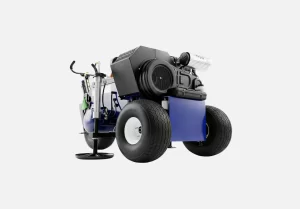
- How deep does aeration go? Standard core aeration reaches a few centimetres. Deep aeration goes much further. Modern air-injection systems, for example, reach up to around 30 centimetres into the root zone.
- How many aeration holes per square foot? Core aeration typically aims for roughly 20 to 40 holes per square foot for an even result.
There are different methods. Core aeration pulls small plugs of soil out of the ground. Deep-tine and air-injection systems go further down and relieve compaction without tearing up the surface, which is the approach used in professional turf aeration and grass maintenance.
How much does lawn aeration cost? For a home lawn it is usually a modest one-off service cost, and how much it should cost depends mainly on the size of the area and the method used. Deep mechanical aeration on a sports surface costs more than a basic core treatment, but it also does far more for the soil.
How often does turf need to be replaced?
It depends entirely on what kind of turf it is.
Natural grass is not “replaced” on a fixed schedule. Instead it is renewed in worn areas through overseeding, sodding and aeration, so a well-managed natural surface can last indefinitely. Artificial turf is different. Most artificial sports turf needs full replacement every eight to ten years, as the fibres flatten and the surface loses its performance.
How often should turf be replaced therefore comes down to use and material. A heavily used artificial pitch wears out faster than a lightly used one, and natural grass lives on as long as it is cared for.
Sports turf around the world
Different sports demand very different surfaces. The same word, turf, can mean very different things.
Cricket turf
What is cricket turf? A cricket pitch is a strip of clay-rich soil, sown with grass, then rolled extremely hard and mown very short to produce a firm, even surface for bowling.
A cricket turf mat is a different thing. It is a matting surface, often coir or artificial fibre laid over a hard base, used for practice nets and at clubs that cannot maintain a full grass pitch. Cricket turf setup cost and cricket turf cost per square foot vary widely depending on whether you are building a natural clay pitch, an artificial strip or a matting wicket, and on the quality of the base beneath it.
Rugby turf
Rugby is played on natural grass, hybrid systems or approved artificial turf. Because rugby involves so much contact with the ground, artificial rugby turf must meet strict safety standards for grip and shock absorption.
Polo turf
Polo is played on one of the largest pitches in sport, so polo turf is almost always hard-wearing natural grass, often bermudagrass in warm climates. It has to survive galloping horses, which is a uniquely heavy form of wear.
Baseball turf
A turf baseball field can be natural or artificial. Many stadiums use natural grass, while others choose artificial turf for durability and lower upkeep.
How much does it cost to turf a baseball field? There is no single figure, because how much to turf a baseball field depends on the size, the chosen surface and the groundwork needed underneath. Artificial installation carries a high upfront cost but lower ongoing maintenance, while playing baseball on natural turf costs less to install but more to maintain.
Grass tennis courts
Are there still grass tennis courts? Yes, though they are now uncommon outside a handful of prestigious venues. How do grass tennis courts work in play? The firm, rolled grass makes the ball skid through low and fast, which is why grass rewards quick, aggressive players and big serves.
The history of turf: who invented it?
Natural grass surfaces are ancient, but artificial turf is a modern invention. The first widely used synthetic turf was developed in the 1960s and famously installed in the Houston Astrodome, which gave the product its early name. It was created to solve a real problem: growing natural grass indoors, under a dome, was nearly impossible.
How much is a turf field today? The cost ranges enormously, from modest community pitches to multi-million investments for professional stadiums, depending on size, surface quality and the groundwork below.
Turf management as a career
For anyone who enjoys working outdoors with a mix of science and hands-on skill, turf management can be a rewarding profession.
Is turf management a good career? For the right person, yes. It blends biology, soil science, machinery and problem-solving, and skilled turf managers are in steady demand at golf courses, stadiums and sports clubs.
How much do turf managers make? Pay varies a lot by country, experience and the prestige of the venue. Entry-level groundskeeping pays modestly, while an experienced head greenkeeper or course superintendent at a major club earns a solid professional salary.
The companies doing this work at the highest level, like the team behind GolfDren, combine decades of on-course experience with specialist equipment, and that expertise is exactly what the best venues are willing to pay for.
Sources:
- Decades of Research Fuel New Specs for Putting Greens
- Choosing Between Poa annua and Creeping Bentgrass for Cool-Season Golf Course Putting Greens
- USGA Putting Green Construction Resources
- Long-term effects of adding biochar to soils on organic matter content, persistent carbon storage, and moisture content
- Biochar as a tool for the improvement of soil and environment
- Wimbledon Grass Courts Preparation 2023
- Artificial turf – Wikipedia